Free electricity and circuit games
Wire up houses, lamps and appliances, and see why some bulbs glow brighter than others. Then build the National Grid that powers whole towns. These games cover complete circuits, series and parallel, voltage, current and resistance, Ohm’s law, fuses, potential dividers, transformers and power losses, from Year 8 up to A-level.
Every game is free, needs no sign-up and runs in any browser. Using it in class?
Electricity games
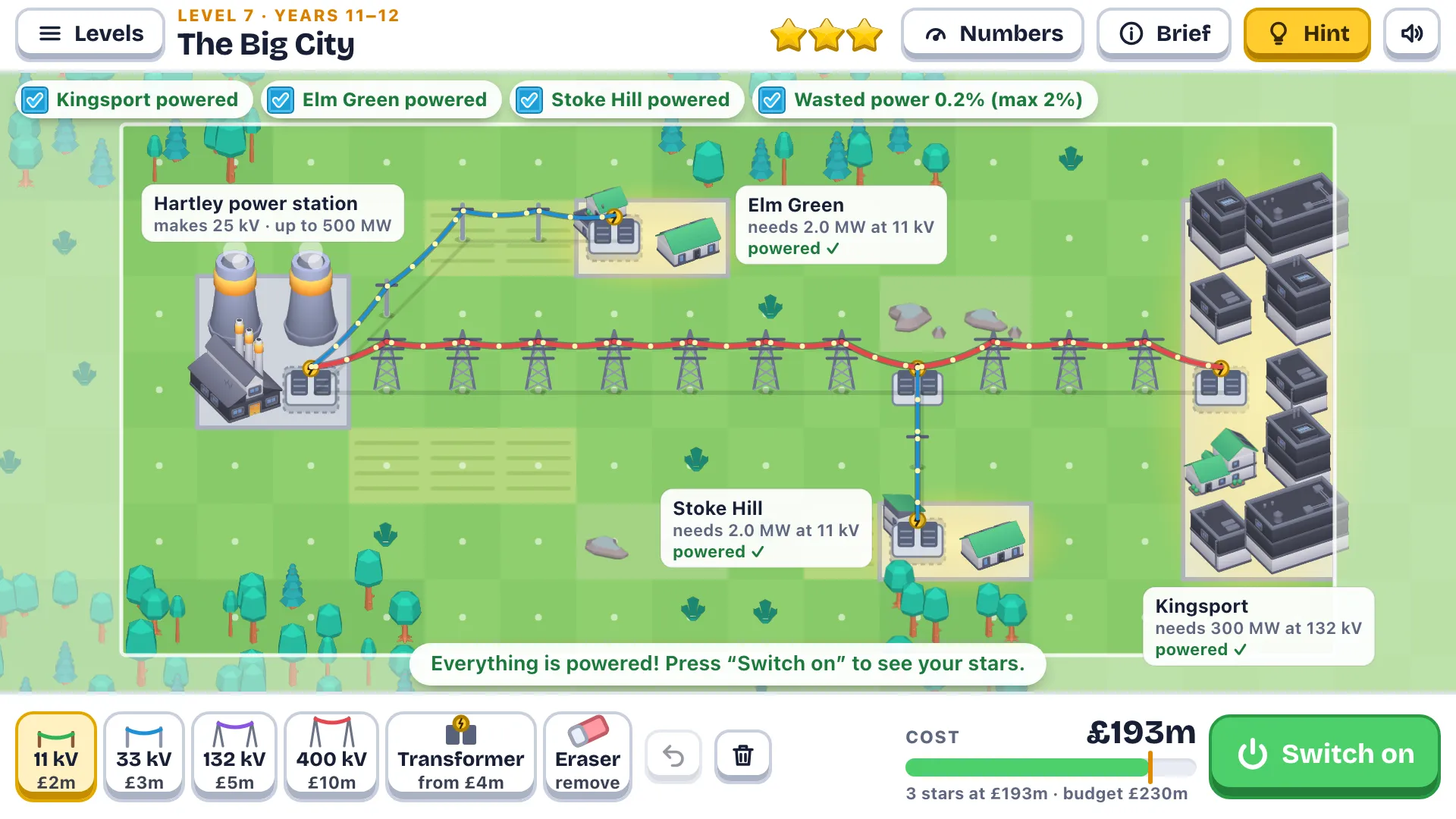
Power Lines
Build a National Grid that powers every town without wasting energy.
Free National Grid game for ages 13–18. Build pylons, transformers and cables to power towns without wasting energy. P = IV, I²R losses. No sign-up.
- Years 9–13
- Ages 13–18
- 8 levels
- Free, no sign-up
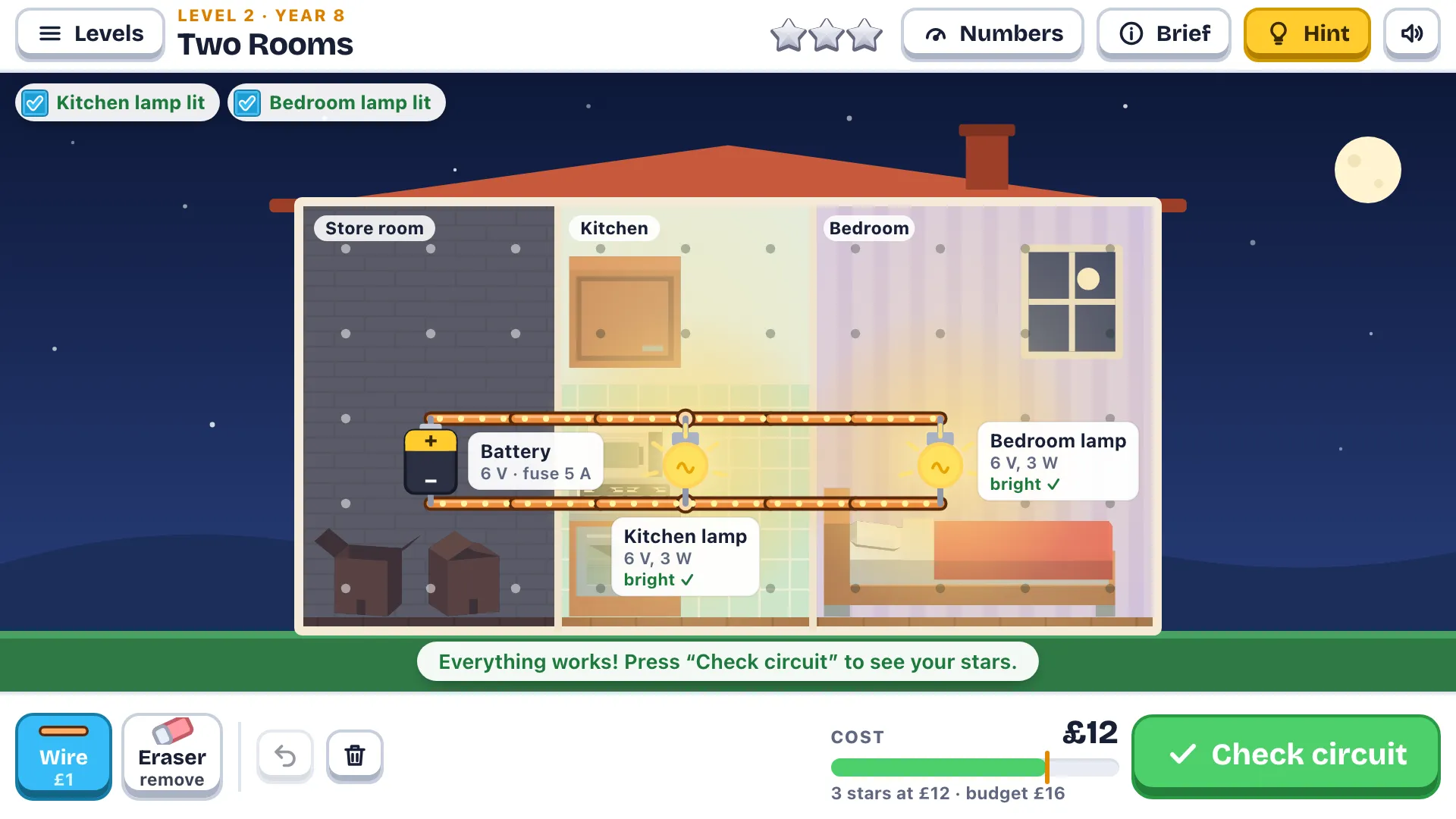
Light It Up
Wire up a house so every lamp, bell and heater works.
Free circuit game for ages 12–18. Wire up a house so every lamp lights, from series and parallel circuits to Ohm's law and fuses. No sign-up needed.
- Years 8–13
- Ages 12–18
- 8 levels
- Free, no sign-up
What students learn
- How the National Grid carries electricity
- Electrical power: P = I × V
- Power wasted in cables: P = I² × R
- Why high voltages waste less energy
- Step-up and step-down transformers
- Current ratings of cables
- Underground and undersea cables
- Planning a network on a budget
- A circuit must be a complete loop
- Series and parallel circuits
- Switches in branches
- Voltage is shared in series
- Ohm's law: V = IR
- Electrical power, P = IV, and fuses
- Potential dividers and loading
- Cable resistance and power losses
Curriculum links
- GCSE Physicsthe National Grid, transformers and why power is transmitted at high voltage
- GCSE PhysicsP = IV and P = I²R
- A-level Physicspower losses in transmission lines and resistance of wires
- Engineering and post-16power system design, network costs and offshore wind
- KS3 Scienceelectric circuits, current, potential difference and resistance
- GCSE Physicsseries and parallel circuits, V = IR, P = IV, fuses
- A-level Physicspotential dividers, resistance of wires and power losses
Free teacher packs
Lesson plans, printable worksheets with answers, and curriculum links.
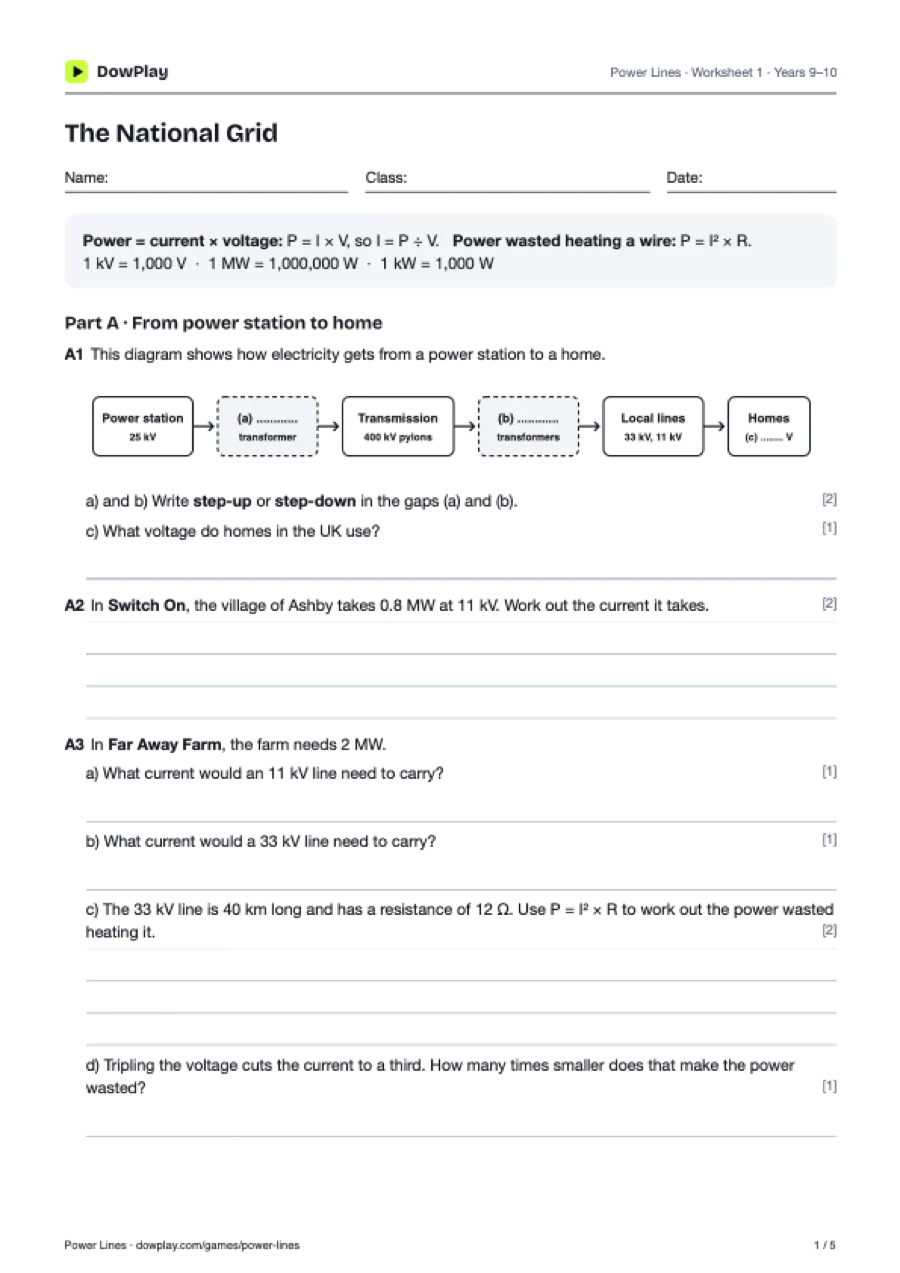
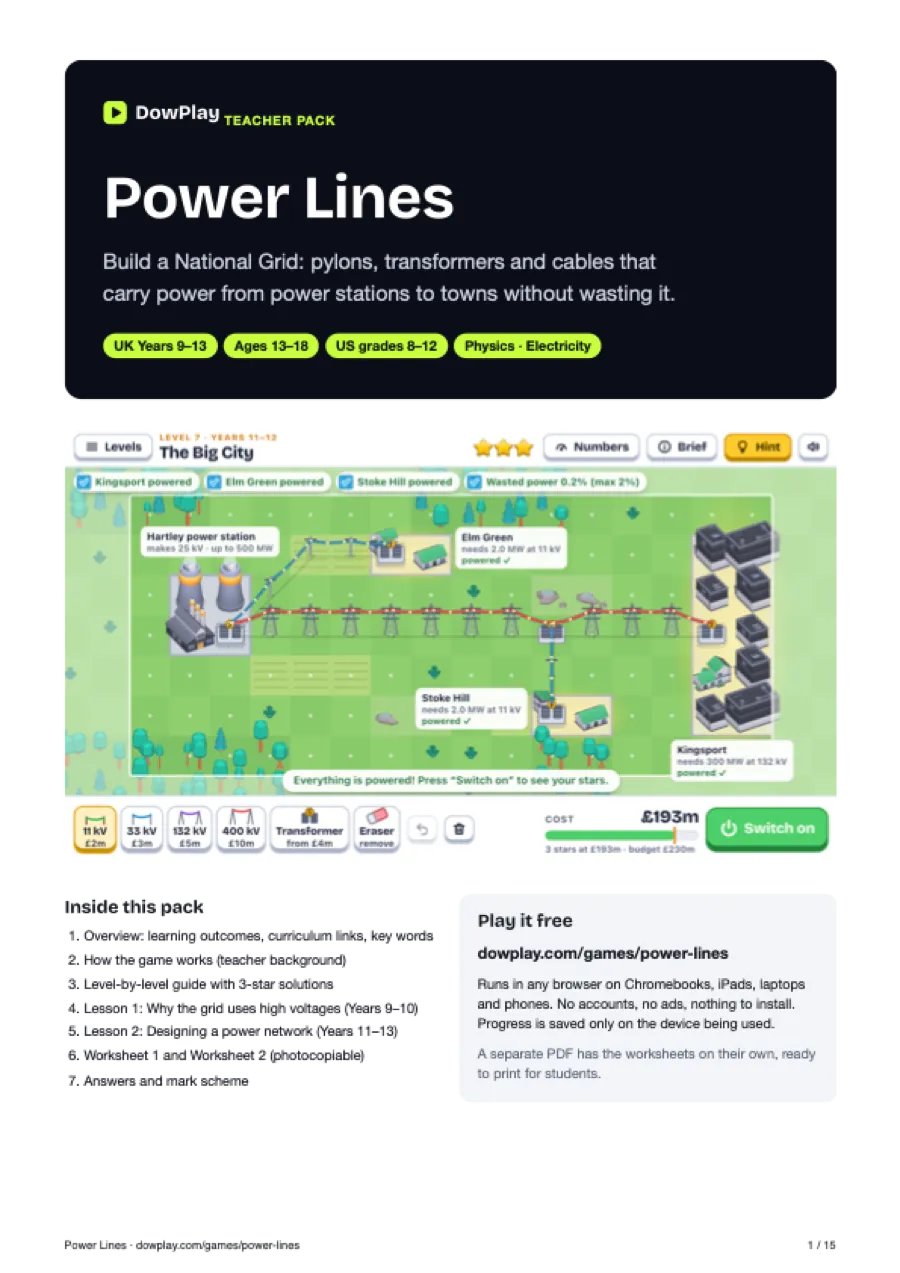
Power Lines teacher pack
- Two 60-minute lesson plans (Years 9–10 and 11–13)
- Two worksheets, with answers and a mark scheme
- A level-by-level guide with the 3-star designs
- Curriculum links (KS3, GCSE, A-level, NGSS)
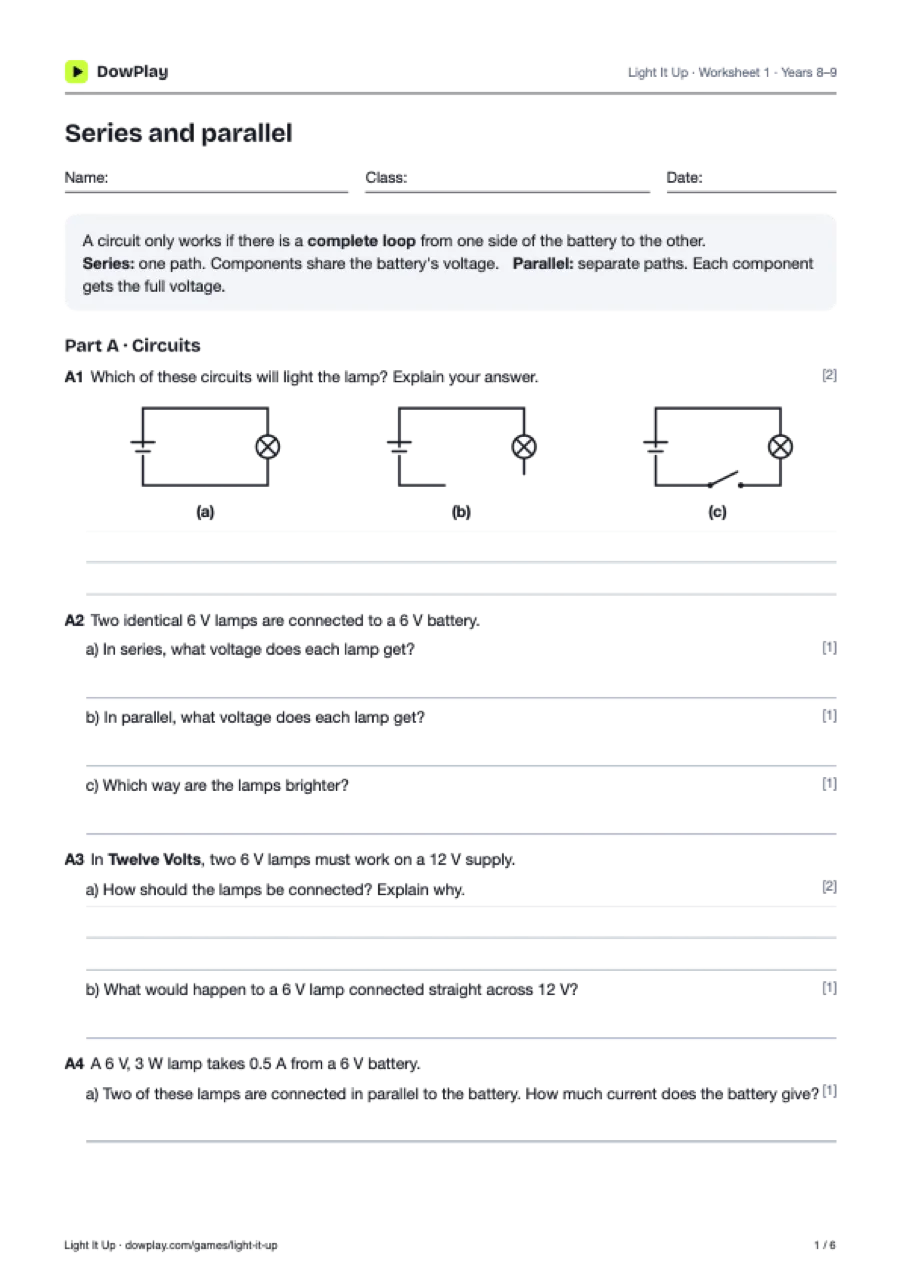
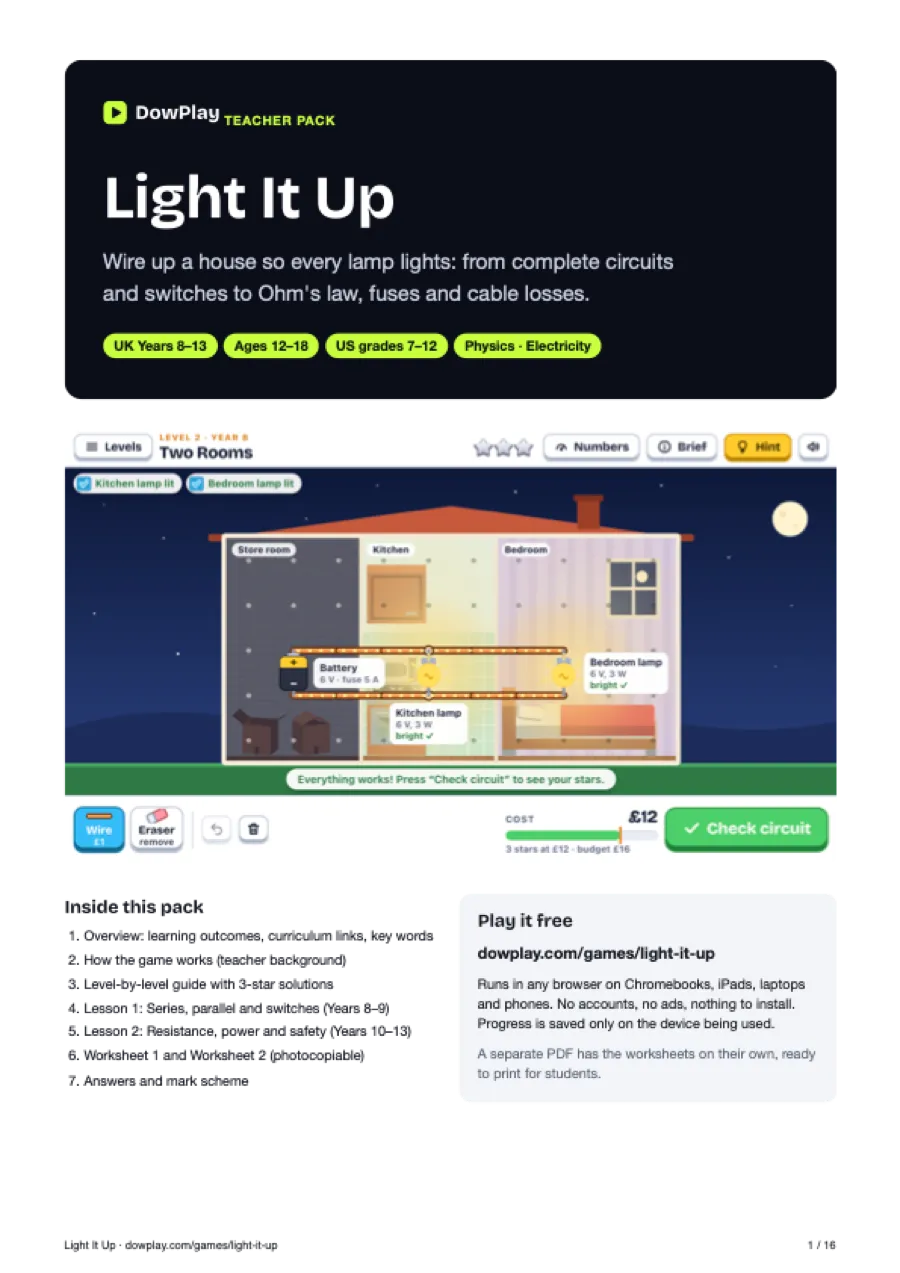
Light It Up teacher pack
- Two 60-minute lesson plans (Years 8–9 and 10–13)
- Two worksheets, with answers and a mark scheme
- A level-by-level guide with the 3-star designs
- Curriculum links (KS3, GCSE, A-level, NGSS)