Engineering games students want to play
Free browser games that turn physics and engineering topics into hands-on puzzles, with a free teacher pack for every game. Levels run from Year 8 to Year 13, so a whole class can start together and every student can stretch as far as they’re able.
Why teachers use DowPlay
No setup
No accounts, no installs and no logins to forget. Share a link and the class starts in seconds, on Chromebooks, iPads, laptops or phones.
Built-in stretch
Levels are labelled by school year, from Year 8 to Year 13. Everyone starts together; fast finishers keep going, and the 3-star target asks for the cheapest design.
Feedback that explains why
Each game runs a real engineering model, so when a design fails students see the reason: a beam buckled, a fuse blew, the batteries ran empty.
Free and private
No ads and no chat. The games collect no personal data and save progress only on the device being used.
Free teacher packs
Lesson plans, printable worksheets with answers, a level guide and curriculum links (KS3, GCSE, A-level and US grades 7–12). Free to download, print and share with colleagues.
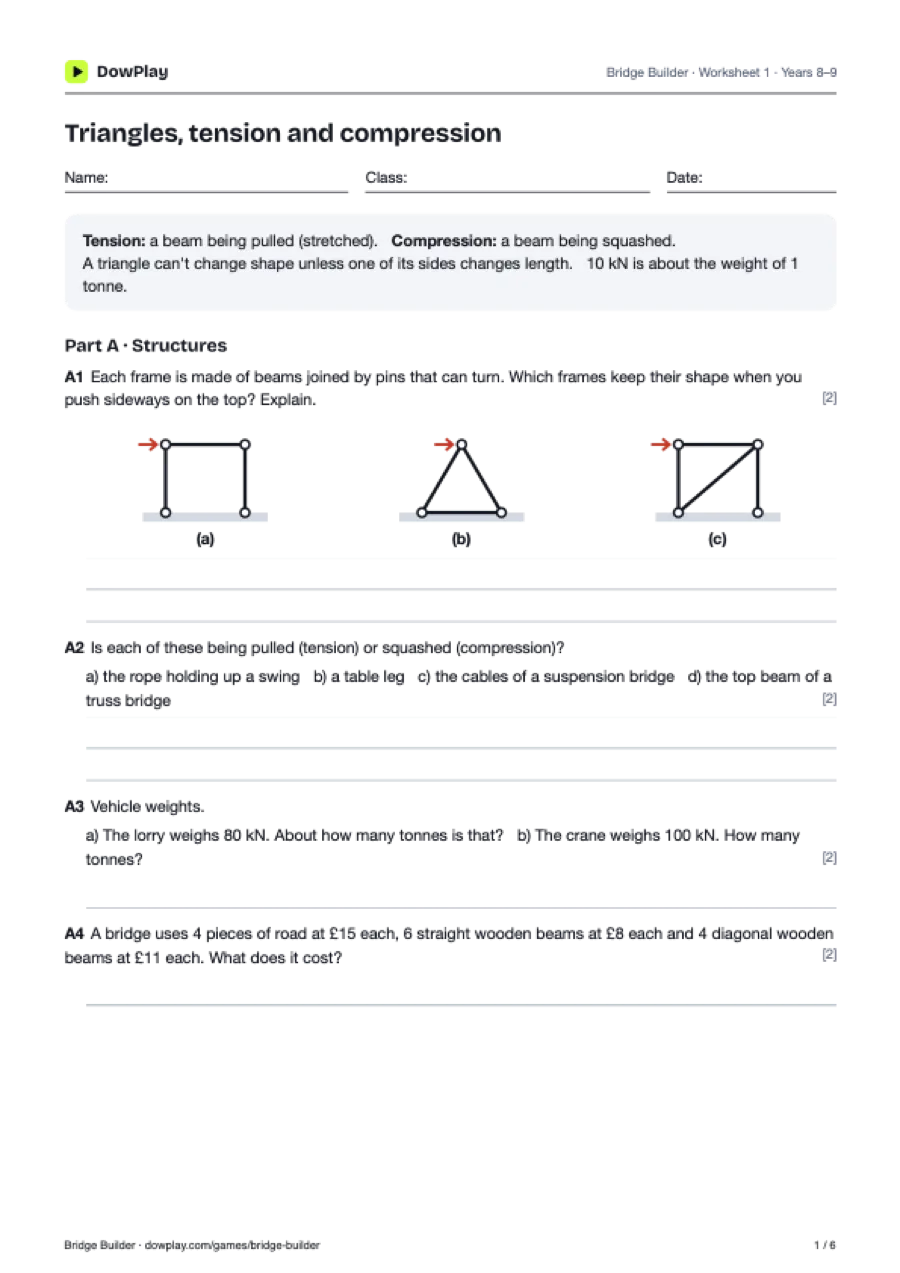
Every game has a pack. Tell us which topics you’d like next.
Games by topic and school year
Each game covers one topic. Its levels are labelled by school year, so you can set the right ones.
| Game | Topic | Years | What students learn | Teacher pack |
|---|---|---|---|---|
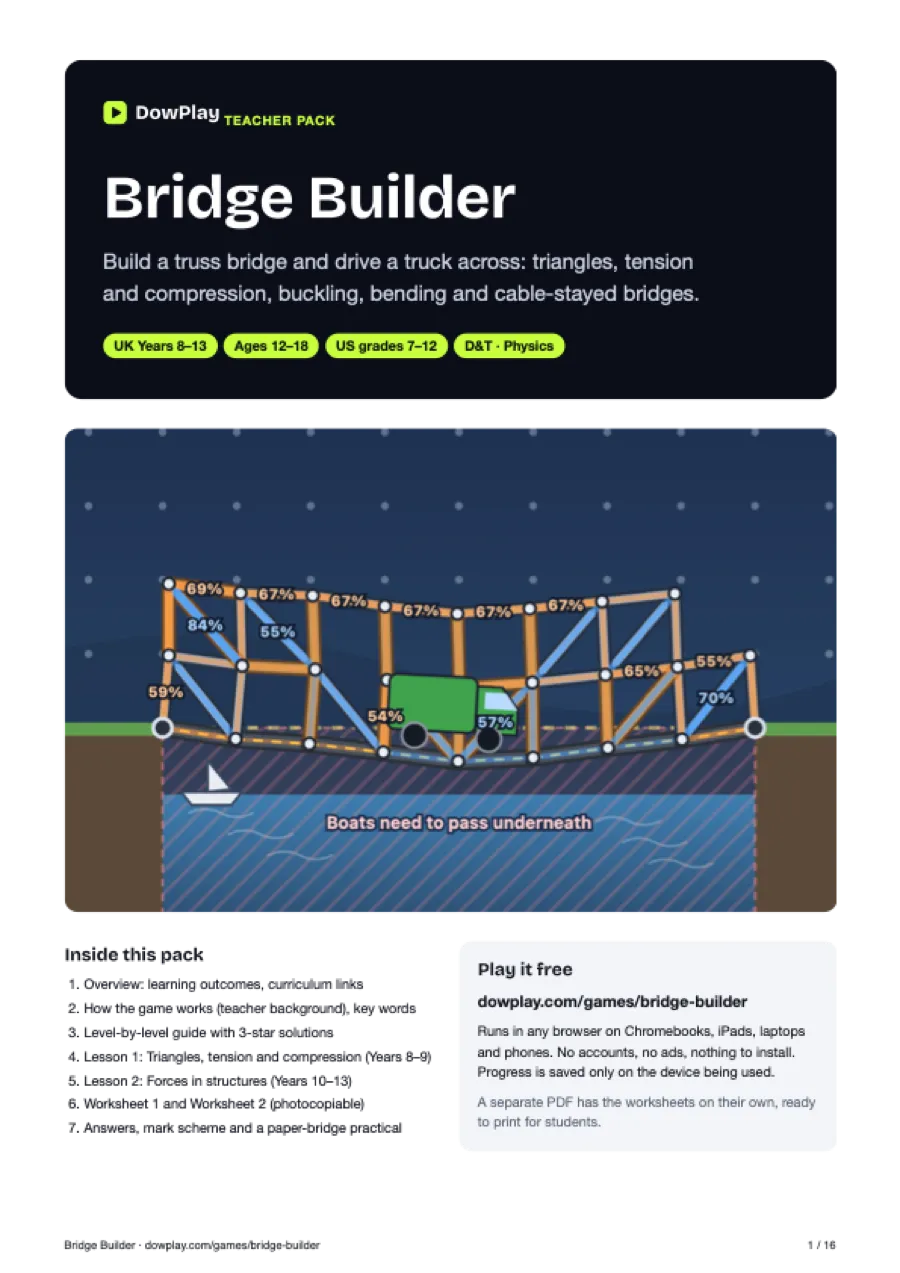
| Bridge Builder | Structures | Years 8–13Grades 7–12 (US) | Triangles make structures rigid, Trusses, Tension and compression, Strong materials where forces are biggest | Free PDF |
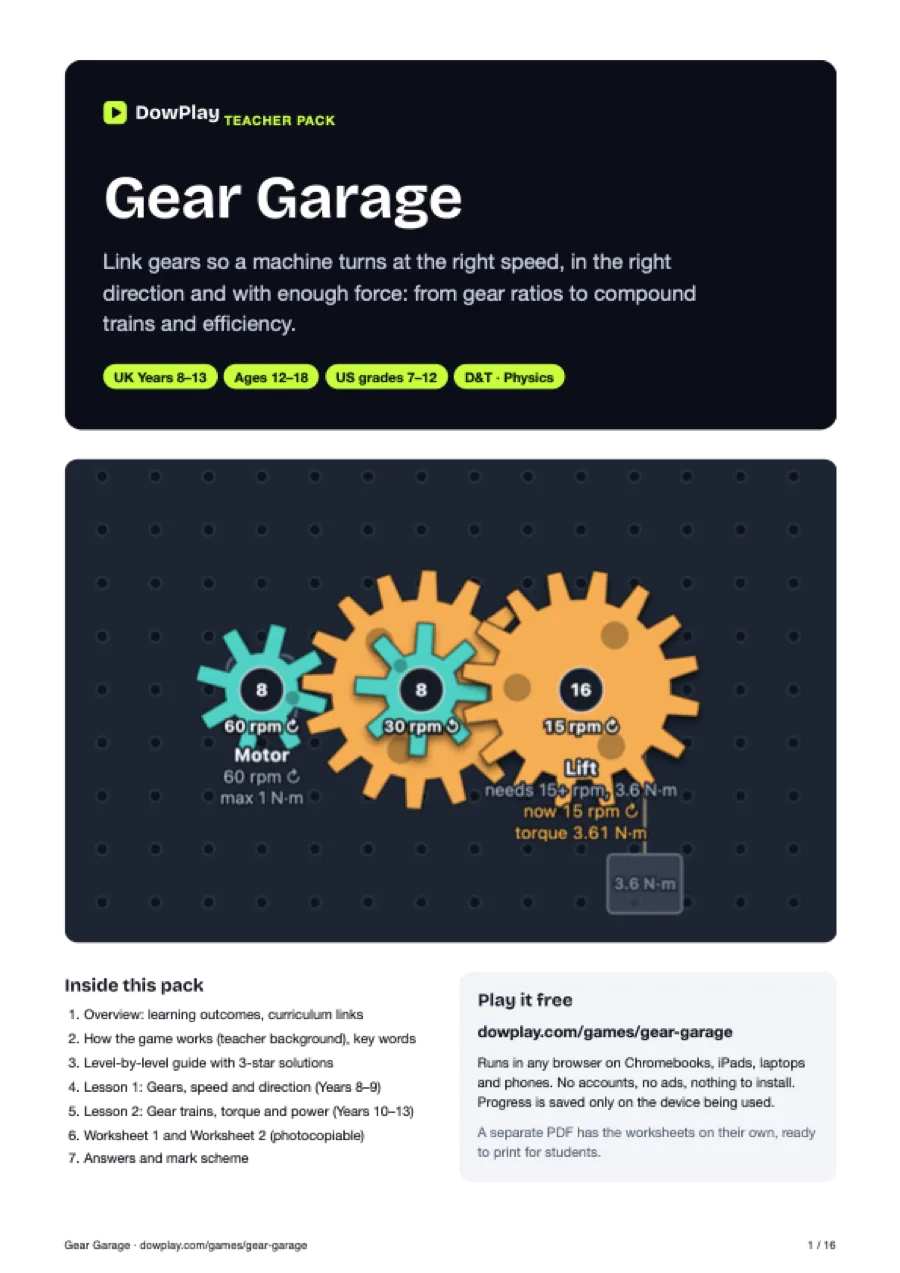
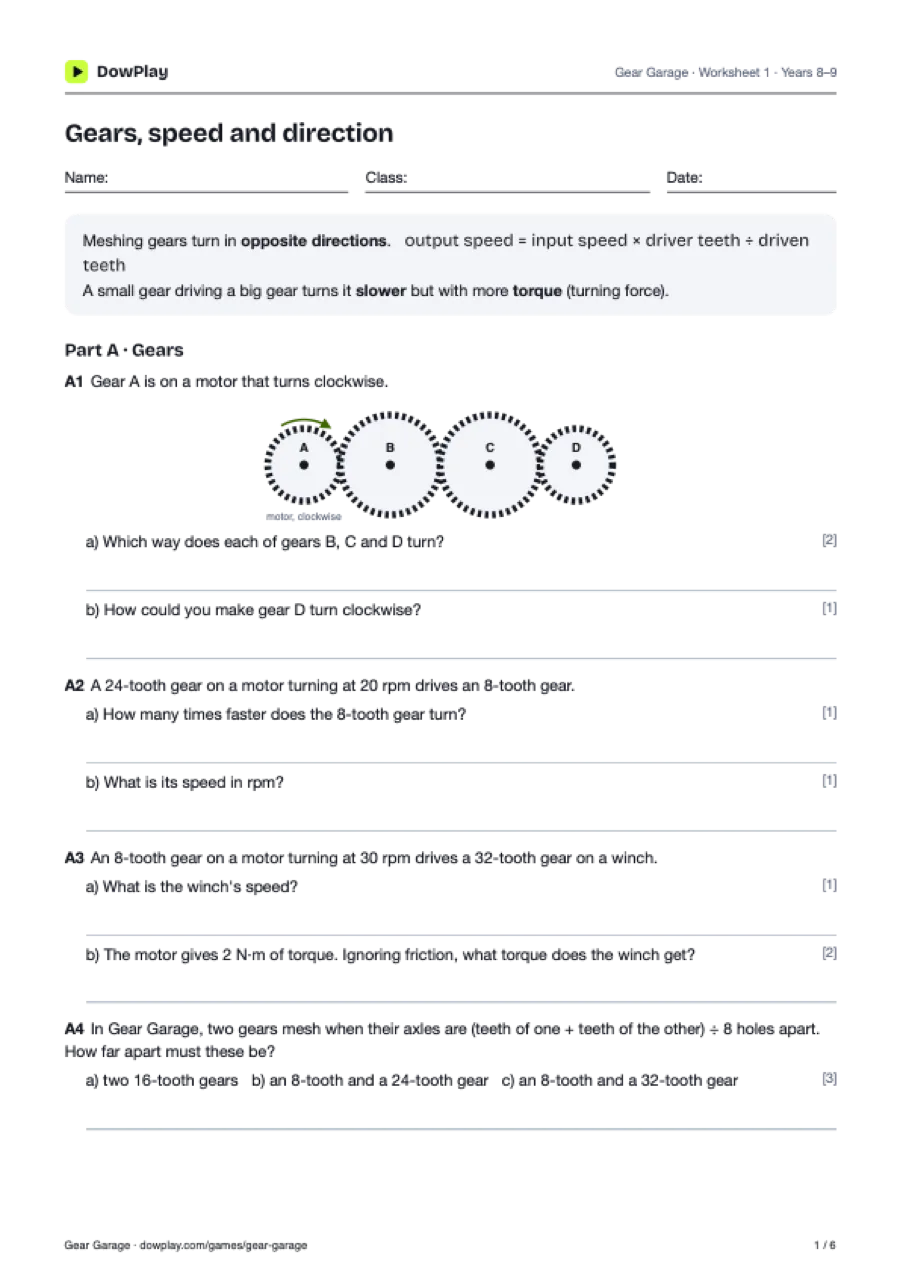
| Gear Garage | Mechanics | Years 8–13Grades 7–12 (US) | Meshing gears turn in opposite directions, Idler gears change direction, not speed, Gear ratio = driver teeth ÷ driven teeth, Trading speed for torque | Free PDF |
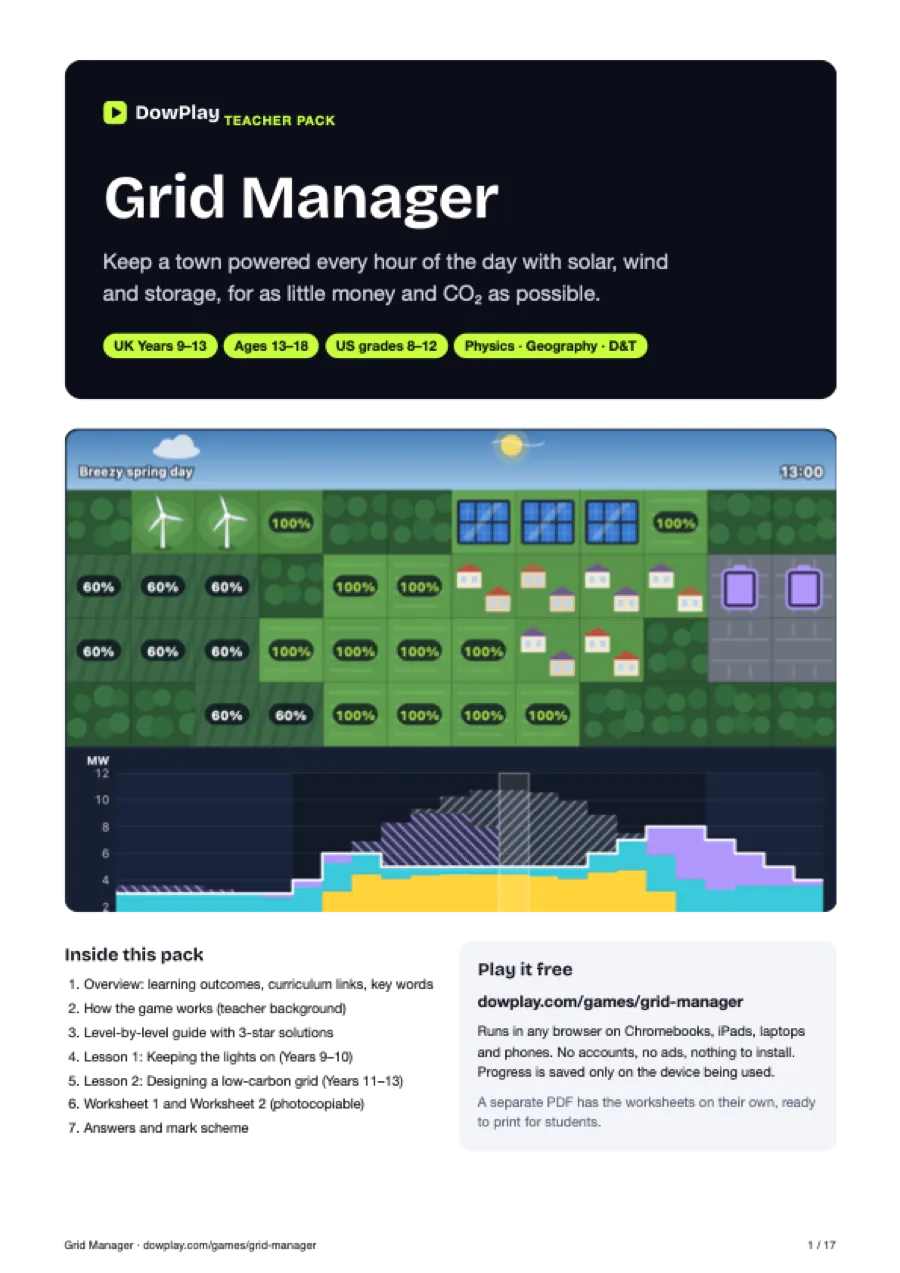
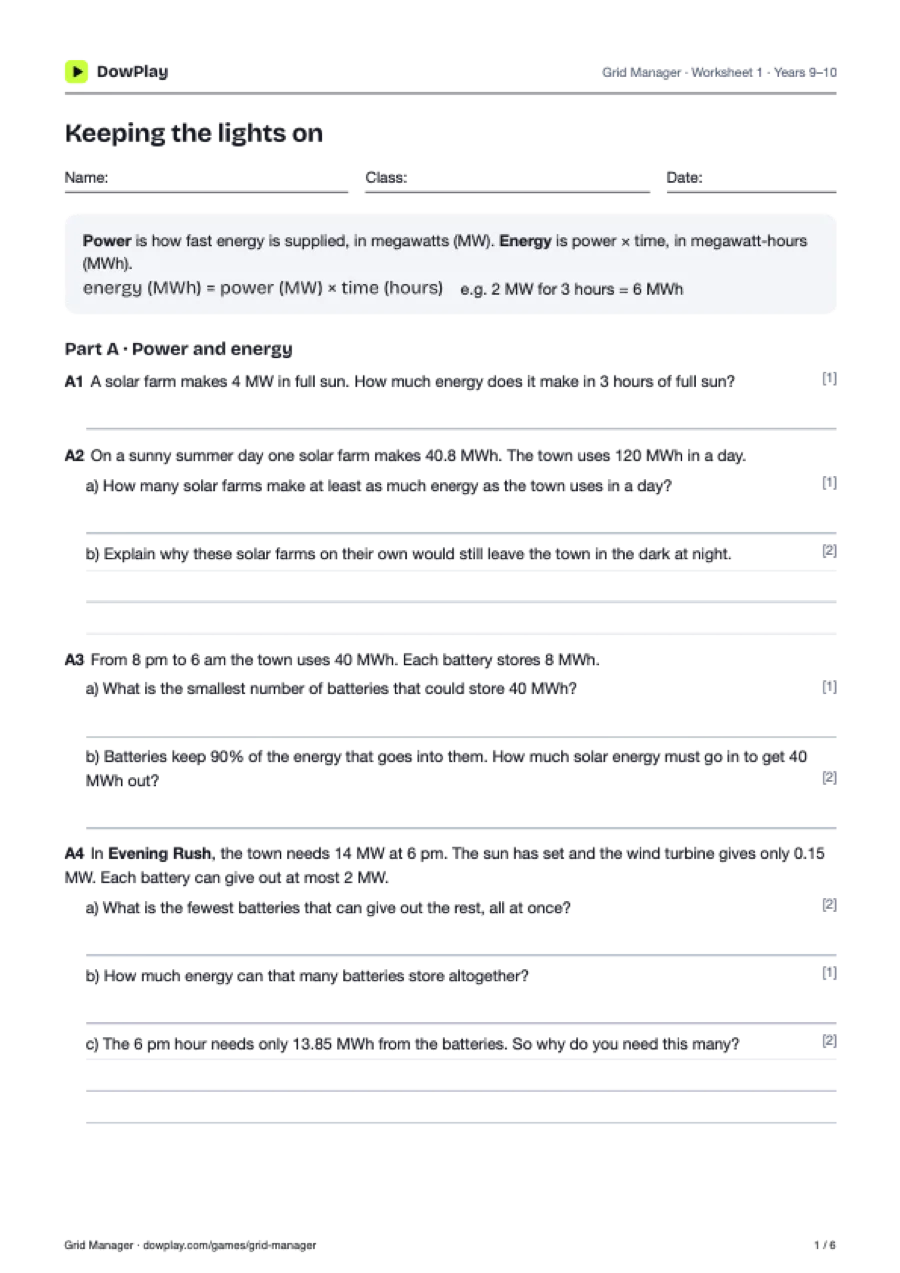
| Grid Manager | Energy | Years 9–13Grades 8–12 (US) | Supply must meet demand every hour, Power (MW) and energy (MWh), Solar and wind change with the weather, Energy storage and efficiency | Free PDF |
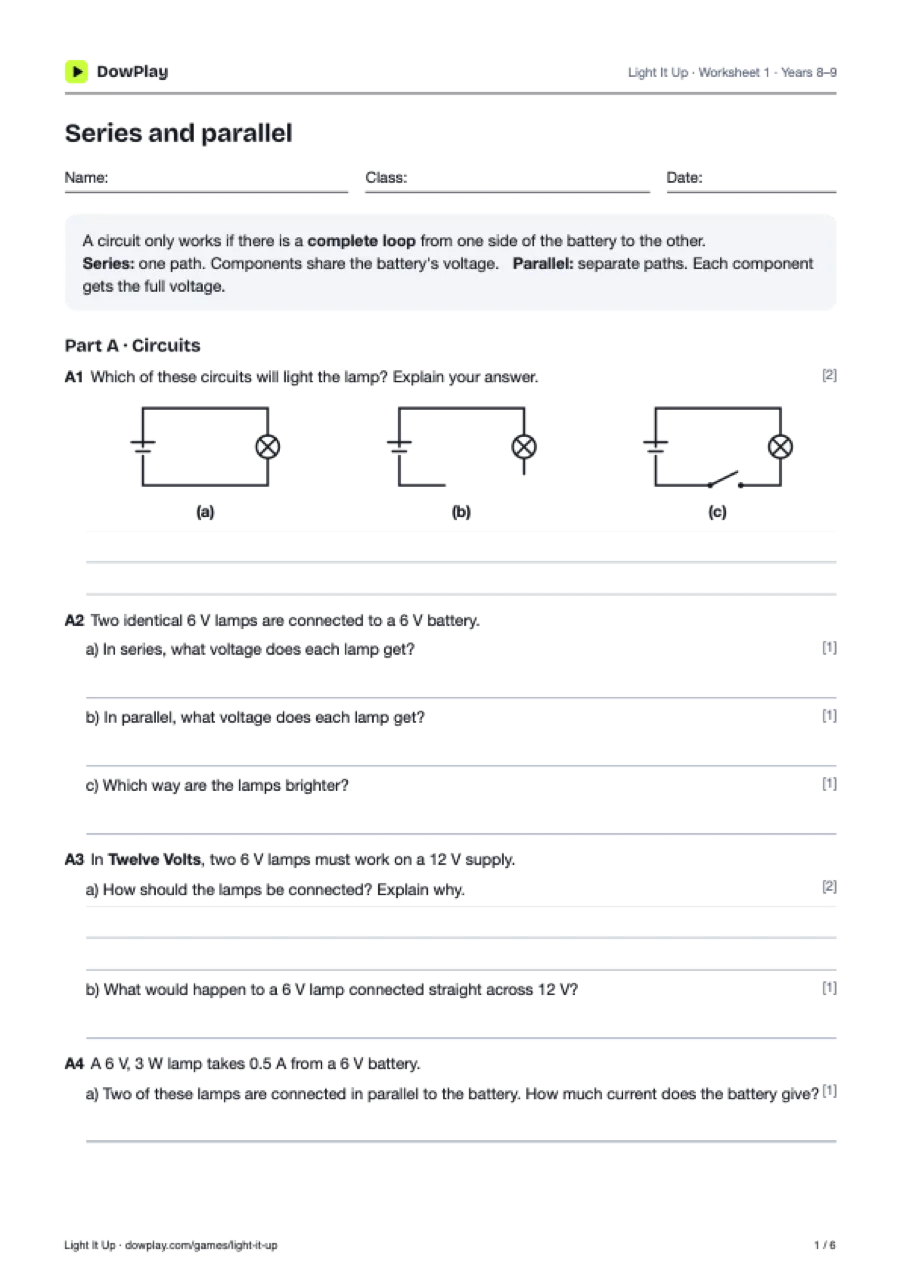
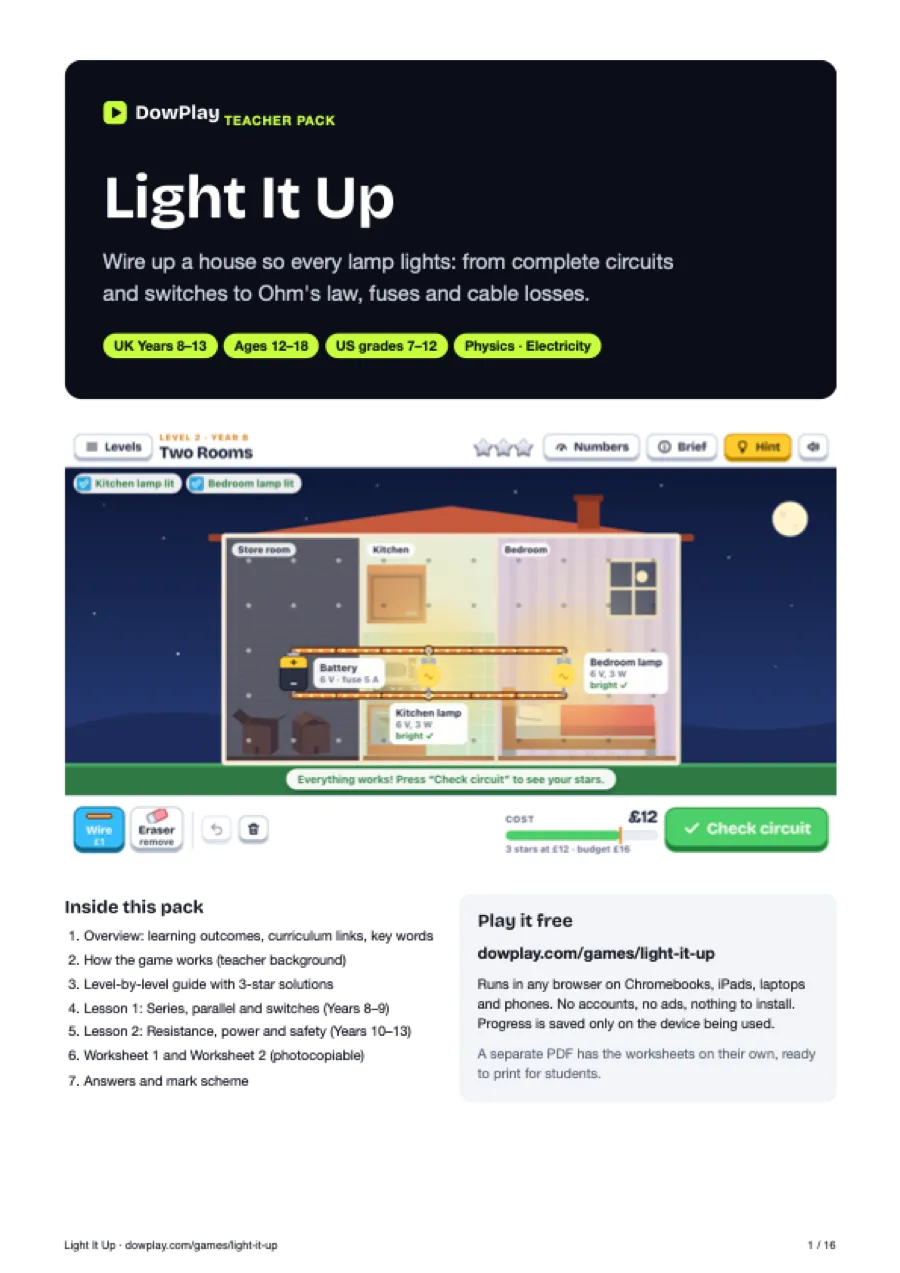
| Light It Up | Electricity | Years 8–13Grades 7–12 (US) | A circuit must be a complete loop, Series and parallel circuits, Switches in branches, Voltage is shared in series | Free PDF |
A lesson in four steps
A simple plan that works with any of the games. The teacher packs have full 60-minute plans.
Starter (5 minutes)
Play the first level together on the board. Before testing, ask the class to predict what will happen.
Main activity (20–30 minutes)
Students work in pairs through the levels for their year group, noting what went wrong each time and how they fixed it.
Challenge
Three stars mean matching the cheapest design we found. Can anyone match it, or beat it? Ask them to explain how.
Plenary
Every level ends with a short “What you learned” summary. Use it to pull out the key idea and link it back to the theory.
Learning at home
The games work just as well at the kitchen table. Play a level together and ask your child to explain why a design failed before fixing it. Explaining is one of the best ways to learn. Progress is saved in the browser, so they can pick up where they left off.
Questions
Something else? Get in touch. Read the full privacy policy.
Is DowPlay free?
Yes. Every game is free to play, with no ads and no sign-up, and so are the teacher packs.
What is in a teacher pack?
Each pack is a printable PDF with two 60-minute lesson plans (one for younger and one for older students), two worksheets with answers and a mark scheme, a level-by-level guide with the 3-star solutions, and curriculum links. A second PDF has the student worksheets on their own, ready to print.
Do students need an account or an email address?
No. Students open a game and play. Progress is saved in the browser on their device, so they can carry on later on the same device.
Which devices and browsers work?
Any up-to-date browser: Chrome, Edge, Safari or Firefox, on Chromebooks, Windows and Mac computers, iPads, Android tablets and phones. A bigger screen makes the harder levels easier. Every game works with a mouse, touch or keyboard.
Which school years and curricula do the games fit?
Levels are labelled with UK school years from Year 8 to Year 13. That is US grades 7 to 12, or ages 12 to 18. The topics come from secondary science, physics and design & technology courses, from KS3 up to GCSE and A-level.
Is it safe for children?
There are no accounts, no chat and no ads, and the games don't collect personal data. If a visitor accepts analytics cookies, we count page visits with Google Analytics; declining them changes nothing in the games. See our privacy policy for details.
Can I suggest a topic or report a problem?
Please do. We read every message, and teacher suggestions decide which games and resources we make next.